
Tract House TV Mounting in Westminster
TV Mounting Mark Westminster covers TV mounting in the single-story tract houses that spread across Westminster after the mid-1950s — plaster or early drywall, studs that do not always keep their spacing and walls patched in a remodel or two — with a probe hole made before the bolts go in.

Bookings aren't open yet. Leave your name and number; your message is recorded, and you'll get one message when a local installer is available.
 Illustration
What a house from the tract era can hide
When farmland around Westminster turned into suburban tracts in the mid-1950s, builders hung plaster and early drywall, and the decades since have added patches, paneling and newer board. A single room can hold more than one of these. They sound and drill differently, and a stud finder cannot tell them apart. The installer taps, looks for old patches and makes a small probe hole where the plate will sit.
The plaster surcharge, in dollars
Plaster chips under a fast bit and the lath behind it hides studs from many finders, so the work goes slower and the bolts come longer. The estimator adds that time; for standard TV sizes the totals read as follows.
| TV size | Drywall | Plaster or early drywall |
|---|---|---|
| 32–49 inch | $92–$132 | $116–$176 |
| 50–65 inch | $112–$162 | $136–$206 |
| 66–85 inch | $146–$220 | $170–$264 |
| 86 inch and larger | $202–$304 | $226–$348 |
The plaster add is $24–$44 on top of the base range.
Proving the framing
Framing in a house of this era is usually wood, but the spacing can wander near a window, a doorway or a former opening. The installer proves each stud with the probe hole and fastens only into wood, using lag bolts long enough to pass through the plaster. If two studs do not line up with the mount, a backer board across them solves it without moving the picture.
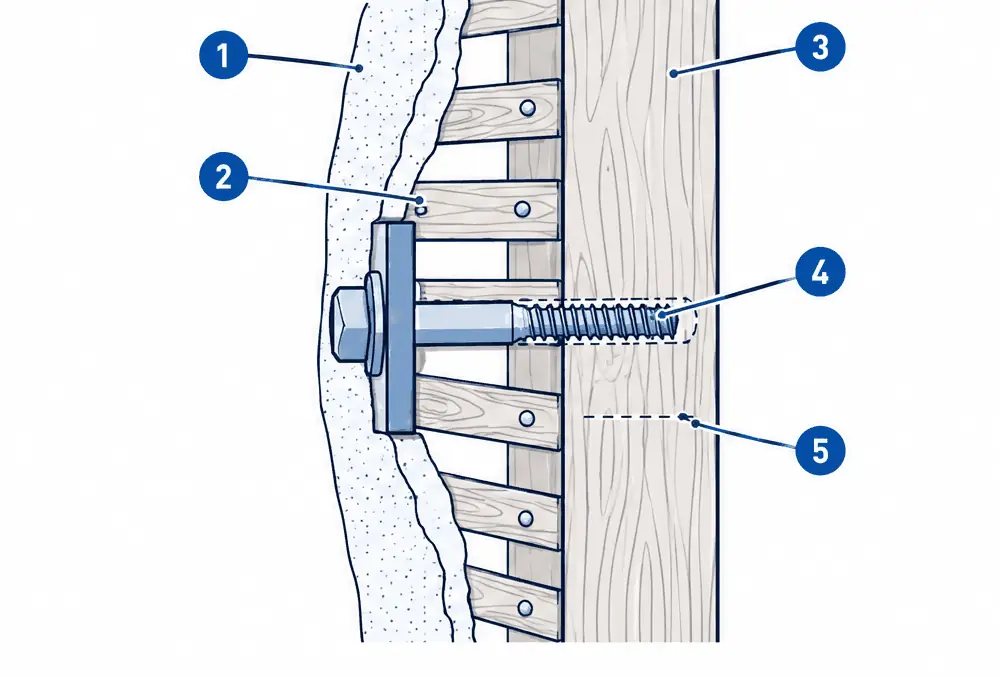
What the numbers show
- Plaster coat The plaster is hard but brittle and chips at the edge of a hole drilled too fast.
- Lath strip Narrow wood strips hold the plaster; they hide the studs from many finders.
- Stud behind The stud is the only part that carries the TV.
- Long lag bolt The bolt is long enough to pass through plaster and lath and still bite deep into the stud.
- Pilot hole A pilot hole, drilled slowly, keeps the plaster from cracking and guides the bolt.
Height, distance and the afternoon window
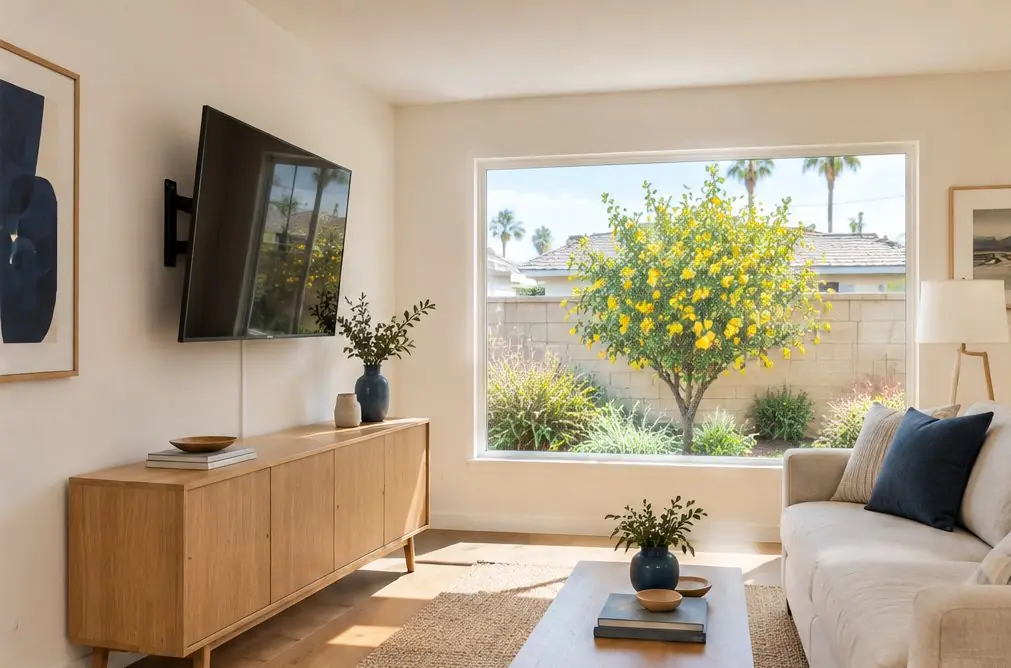
A screen hung too high is easy to do in a room with a standard ceiling and a tall console. The center of the picture belongs near the eye line of someone seated. In a family room that opens onto a bright yard, a few degrees of tilt or a spot away from the glass keeps afternoon reflections off the screen, and tape on the wall checked from the sofa settles both before a hole is drilled.
Tract House TV Mounting — common questions
Do Westminster's older tract houses have plaster walls?
Many have plaster or early drywall in the original rooms and newer drywall where a room was redone, so each wall is checked on its own.
Why does plaster cost more to mount on?
It chips under a fast bit and hides the studs, so the work is slower and needs longer bolts. The estimator adds $24–$44 for it.
Availability & price range
Tract House TV Mounting: check availability and price range
Bookings aren't open yet — answer a few quick questions about the TV and the wall and get a typical Westminster price range right here. Typical Westminster prices for one TV, labor only unless an option says otherwise. This is a market estimate, not a quote.